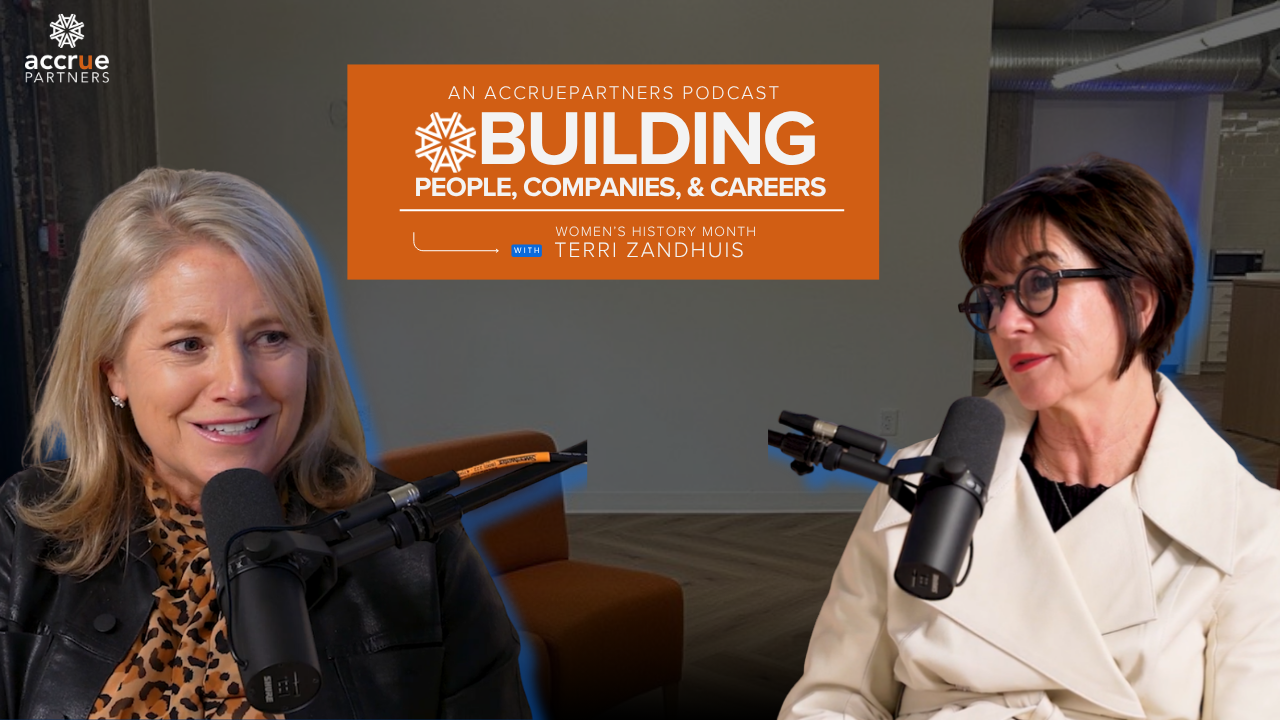
Amy: You talk to more executives in a year than most leaders do. What are you hearing right now that isn’t making headlines yet?
TJ: It still centers on AI, because AI dominates the headlines. But what executives keep coming back to is that we still need people in jobs making decisions. I’m by no means an AI expert, but I listen and ask questions. What you’re not seeing in the headlines is a kind of AI burnout.
Look at our events. Three years ago, people would accept an award and joke that ChatGPT wrote their notes, and everyone would laugh. Now people say, “I’m a person. ChatGPT did not write this. It might sound horrible, but this is my acceptance speech.”
Amy: More authentic.
TJ: More authentic. Executives want people who know how to use AI to drive the business forward. You have to have that. But they also want people who can have a conversation like this one, pick up the phone, run a meeting, and build the relationship. When something is going well, you share it. When something goes wrong, you say, “This is going to be a hard conversation, but here’s what happened. How do we get through this together?” The question is how to keep people honing those soft skills while they become experts in AI.
Are jobs being lost? Absolutely. Certain industries more than others. But what I’m hearing across the verticals the Business Journal covers is that while many organizations may not be creating jobs right now, they aren’t losing jobs to AI either. That could change quickly, but it’s a silver lining.
Amy: I recently listened to a global HR analyst who argued that AI will create more jobs, because you need the people feeding it, the people who serve as the human in the loop, and the communicators. In every conversation I have, technical skills are table stakes. What people are looking for is communication, curiosity, flexibility, and adaptability, because we all still have to communicate, be authentic, and keep learning.
TJ: That’s very true. Love it or hate it, AI is at the forefront of everything.